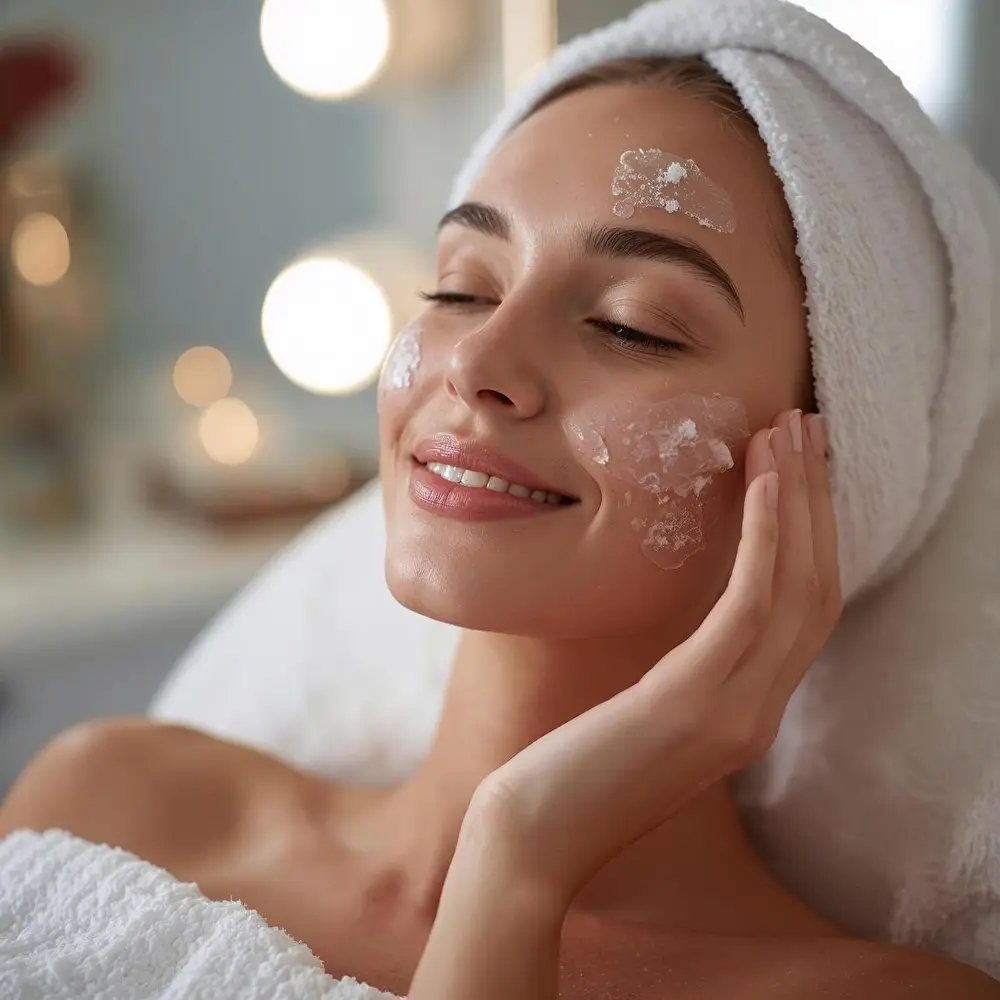
Enzyme exfoliant for sensitive skin: gentleness without redness
Enzyme exfoliator for sensitive skin: gentleness without redness
If you struggle with sensitive skin, “overly active” exfoliation can end in redness, tightness, and unpleasant stinging. That’s exactly why an enzyme exfoliator is increasingly being chosen-it renews the skin’s surface without harsh particles and without strong acids. This method works subtly: by breaking down protein bonds, enzymes help evenly remove dead skin cells, so the skin looks calmer and more radiant. Such gentle exfoliation supports the skin barrier, which is important for those whose facial skin reacts quickly to temperature changes, cosmetics, or even touch. The first sensations are usually comfort without redness, and after a few weeks you’ll see noticeable softness and smoothness.
When we talk about the term “enzyme exfoliator,” we most often mean products with papaya (papain), pineapple (bromelain), pumpkin, or silk enzymes. These enzymes are like tiny “micro-scissors” that selectively break down the “glue” holding dead cells together-so they lift away easily, while healthy cells are hardly touched. Because of this action, the skin does not experience intense chemical or mechanical stress, so the risk of irritation is reduced. At the same time, the absorption of hydrating and soothing products improves, because the barrier of dead skin cells is removed. If you’re looking for a starting point, browse the selection in the category Face exfoliators and pay attention specifically to enzyme options.
How enzymes work and how they differ from acids
Acids such as AHA or BHA dissolve intercellular “cements” through pH changes, while enzymes act as biocatalysts and target proteins more selectively. For this reason, enzyme exfoliation is often gentler for sensitive skin, where the integrity of the barrier is already more fragile. Enzymes “work” at room temperature and at a physiologically acceptable pH, so the sensation during use is usually more comfortable. In addition, enzyme products often require a shorter contact time with the skin-enough to make the surface smoother. The result is clearer, more even skin without noticeable stinging.
Another difference is a lower risk of “over-exfoliation,” because enzymes have a kind of “stop button”: once they lose their substrate, they have nothing left to “cut.” This doesn’t mean you can’t overdo it with enzymes, but when used carefully, they forgive more mistakes. For sensitive skin, this matters, because one overly harsh session can make the barrier react for longer than just a few days. Meanwhile, with the right strength and timing, enzyme exfoliation becomes a solid, moderate base for an entire layering routine. This “smart” action lets you enjoy the benefits more often without unpleasant consequences.
What results you’ll realistically see
The first weeks usually bring a visibly smoother surface and a more pleasant-to-the-touch texture. Gentle exfoliation helps shed dullness faster, and makeup applies more evenly because flaking is reduced. Over a longer period, you’ll notice fewer small rough patches and “clogs,” and the complexion becomes more vibrant. With a calmer barrier, episodes of redness after cleansing or wind decrease, because the skin simply isn’t constantly “sensitized.” Finally, the effectiveness of actives-e.g., niacinamide or hyaluronic acid-improves, because they can reach where they need to go more easily.
Real-life experience also depends on the formula and how it’s combined with other products. If exfoliation is followed immediately by careful hydration, the skin maintains comfort even in warmer seasons. Those who are especially sensitive often notice that the enzyme method allows them to keep their routine without interruptions from reactions-it becomes a “quiet” investment in everyday smoothness. At the same time, you don’t have to completely give up acids: they can remain a less frequent, targeted tool, while enzymes serve as the foundation of daily care. The most important thing is to listen to your skin and rely on the signals it sends, not the rules on the packaging.
How often to use for sensitive skin
For sensitive skin, the first rule is to start with a lower frequency and shorter contact time, then increase if needed. For most people, 1–2 times per week works well, but for very sensitive skin, once every 7–10 days may be enough. If your formula is a leave-on type, follow the manufacturer’s recommendation, and during the first weeks rinse off sooner than indicated to assess tolerance. If you notice your skin feels calm, you can extend the contact time by one to two minutes. If unusual burning or pronounced redness appears, reduce frequency and return to a shorter time.
Season and environmental conditions also matter-on windy, cold days the skin needs more protection, so it’s better to move exfoliation to the evening and follow it with more generous hydration. In hot weather, when we sweat more, pore “clogging” becomes more active, so an enzyme product can help maintain cleanliness without aggression. After exfoliation, always choose a caring finish: a mist or spray and a soothing cream. It’s worth looking for hydration ideas in the category Sprays and Mists for Facial Care, especially if you like to layer in light, comfortable steps.
Ingredient guidelines: what to look for
When choosing an enzyme product, in addition to the enzymes themselves, pay attention to soothing components. Colloidal oats, panthenol, allantoin, beta-glucan, or chamomile extract help balance the process and reduce potential reactions. A hydrating base with glycerin and hyaluronic acid will help retain water so the “new” surface doesn’t feel tight. Added emollients such as squalane or ceramides strengthen the barrier and support comfort. Lightly scented or fragrance-free formulas usually suit better, because fragrance is often a “trigger” for sensitive skin.
An enzyme “duo” often works synergistically: for example, papain with bromelain can provide both smoothing and brightening. If your skin tone is uneven or prone to dullness, consider products with added antioxidants-vitamin E and vitamin C derivatives or green tea extract. Such a formula not only renews, but also helps fight environmental stressors. Those more sensitive and prone to redness may like niacinamide at a low percentage-it soothes and strengthens the barrier without creating extra “commotion.” All of this allows an enzyme exfoliator to become not a separate trick, but part of a balanced routine.
What to avoid for sensitive skin
If your skin tends to flush or react, protect it from hard, abrasive particles that scratch the surface and can increase capillary sensitivity. Also be cautious with high-concentration AHAs or combined “all-in-one” formulas that deliver a quick effect but often “burn out” comfort. Using multiple layers of actives on the same day is a common mistake that quietly creates persistent redness. Avoid strong fragrances and menthol derivatives, as they often create a sensory “cooling” feeling that is a sign of irritation. If alcohol appears high on the ingredient list, it’s worth looking for a gentler alternative.
Finally, remember that for sensitive skin, the cleansing step is often in the crosshairs. Overly aggressive cleansers amplify the effects of exfoliation in the wrong way, so choose gentler, non-foaming gels or creamy cleansers. If you still prefer a fresher feel, pair with hydrating mists and a cream to neutralize the drying effect. Your routine should function like a team, not a race for strength. The more moderate you are day to day, the fewer surprises you’ll encounter when using enzymes.
Enzyme vs. mechanical and acid exfoliation
Mechanical scrubs give an instant “clean” feeling, but gritty particles can microscopically damage the surface of sensitive skin. Acid exfoliants are highly effective for texture and pigmentation, but require careful dosing and monitoring, especially in winter. An enzyme exfoliator occupies a middle position-it provides smoothness but doesn’t provoke an aggressive response. If your priority is comfort without redness, enzymes are usually the first choice, while acids are an “occasional” tool. For sensitive skin, it’s better to reserve mechanical exfoliation for rare, very gentle formulas-or avoid it altogether.
Still, different methods can coexist if you clearly allocate the schedule: enzymes as the everyday base, acids for targeted goals every few weeks, and mechanical exfoliation-if needed at all-only subtly and rarely. This strategy helps reduce sensitivity peaks and maintain consistent progress. Evaluate your goals: is the most important thing glow without discomfort, or faster change with higher risk? For sensitive skin, the first path usually proves best. And if you want assortment ideas tailored to skin needs, explore Products for sensitive skin-there you’ll find hydrating and soothing allies for your new softness.
Step by step: a mini ritual with enzymes
- Gently cleanse the skin with a non-aggressive cleanser and pat dry, leaving a slight moisture.
- Apply a thin layer of the enzyme exfoliator and leave it on as directed; in the first days, for a shorter time.
- Gently rinse with lukewarm water and dry without rubbing, pressing a towel against the face.
- Spritz a hydrating mist and seal with a cream containing ceramides or squalane.
- During the day, don’t forget SPF-glow looks best when the skin is protected.
This simple but thoughtful ritual helps you benefit from enzymes without additional irritants. Each step plays its role: moderate cleansing doesn’t take too much away, enzymes smooth, and hydration stabilizes. If you feel your skin is responding calmly, you can gradually extend the time with the product. This lets enzymes do their work without overloading the skin with excessive stress. Comfort becomes a natural outcome, not an accident.
The most common mistakes when using an enzyme exfoliator
One of the biggest mistakes is thinking that gentle exfoliation “does nothing,” and trying to compensate with longer contact time or daily use. This approach often ends in redness, tightness, and developing sensitivity to other steps. Another mistake is layering acids, retinoids, and enzymes on the same evening, hoping for a “spa effect.” The skin remembers such experiments not with glow, but with protest. It’s also often forgotten that hydration after exfoliation is not optional-it’s a necessity.
Another group of mistakes is choosing the wrong formula: an intense fragrance, a menthol sensation, or high alcohol in the formula does more harm than good for sensitive skin. Another issue is not reading the instructions-for example, leaving an enzyme mask on twice as long as recommended. Finally, SPF is forgotten: a renewed surface is more sensitive to the sun, so protection is the last and essential step. By avoiding these mistakes, enzyme exfoliation becomes not a risk, but a daily investment in calm. And consistency of results is the best motivation.
How to combine with other skincare
Enzyme exfoliation pairs beautifully with hydrating toners, mists, and layering creams. After the procedure, soothing mists are a great choice-they not only restore comfort, but also help active ingredients distribute more evenly. If you want to strengthen the barrier, choose creams with ceramides, squalane, cholesterol, or niacinamide. In the evening, you can add a light oil drop, especially in winter, to lock moisture in. During the day, of course, SPF completes the architecture of the routine.
If you use retinoids, it makes sense to separate them from enzyme-exfoliation days to reduce possible cumulative irritation. Acids can remain as a periodic tool, for example for pigmentation goals, but not on the same day as enzymes. For those who want a simpler plan, a “2+2” rhythm works well: twice a week-enzymes; twice-only hydration and barrier support without any actives. Such balancing helps preserve calm, and the skin thanks you with a smoother surface and a more even tone. Ultimately, aim to stay consistent-it’s often more important than any single product.
A short shopping guide for sensitive skin
- Formula: look for papain, bromelain, or pumpkin enzymes, plus soothing additions (panthenol, beta-glucan, allantoin).
- Texture: sensitive skin often prefers gel or creamy masks that are easy to control by time.
- Fragrance: choose fragrance-free or very lightly scented products if you tend to react.
- Routine: after exfoliation-a mist and a cream; you’ll find ideas in Sprays and Mists for Facial Care.
- For browsing categories: take a look at Face exfoliators and Products for sensitive skin – this makes it easier to select targeted formula features.
This short guide makes the decision easier even when the selection seems broad. By knowing the key selection criteria, you’ll be able to “scan” the label faster and assess whether the product fits your routine philosophy. In the case of sensitive skin, even small differences in a formula create a big contrast in how it feels, so it’s worth being picky. Moreover, a clearly defined goal-smooth skin without redness-helps resist the temptation to buy “because it’s trending.” A targeted shopping strategy is just as important as a good product.
Is enzyme exfoliation suitable for all types of sensitivity?
For most sensitivity types-yes, but the rhythm and formula should be individual. If the skin barrier is very compromised, start with very short contact times and only products with soothing additions. For rosacea-prone skin, enzymes often work well, because they are less likely to provoke vasodilation than aggressive acid exfoliants. Still, always monitor how it feels: if it burns, itches, or feels tight for longer than a few minutes after rinsing, reduce frequency. This cautious approach lets you use the benefits of enzymes effectively without crossing the comfort threshold.
For combination sensitive skin, enzymes help “manage” shine in the T-zone without damaging dry cheeks. For mature sensitive skin, they provide smoothness without additional irritation, which is especially relevant when the barrier tends to thin. For post-acne remnants, enzymes often help even out the surface, though pronounced pigmentation concerns may require targeted products. The most important thing is consistency and patience, because gentle methods build results over stable weeks, not overnight. This tactic ultimately wins over a “wave” regimen that brings fluctuations.
Conclusion: gentleness that works
An enzyme exfoliator is a highly rational choice for sensitive skin, because it combines effectiveness with respect for the skin barrier. The selective action of enzymes helps achieve smoothness, radiance, and better product absorption without having to “grit your teeth” through discomfort. When paired with hydrating sprays and soothing creams, results become consistent and predictable. By listening to your skin’s signals and adjusting frequency and time, you’ll maintain the balance between progress and calm. And when you need inspiration, return to the categories Face exfoliators, Sprays and Mists for Facial Care and Products for sensitive skin-there you’ll find a duo of gentleness and effectiveness without redness.