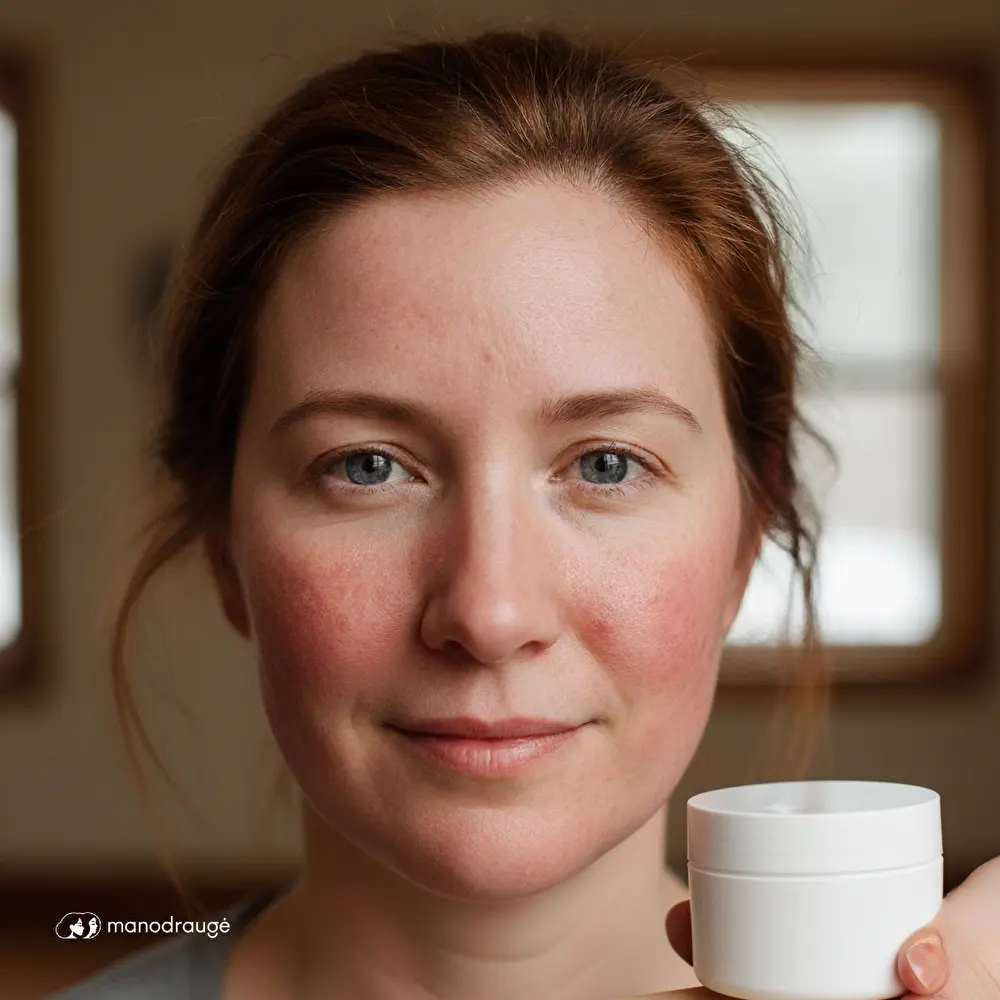
Redness and rosacea: soothing solutions for sensitive skin
Redness and Rosacea: Soothing Solutions for Sensitive Skin
Rosacea is not just “red cheeks,” but a chronic skin condition with flare-ups that come in waves, sensitivity, and sometimes even flaking. In this context, it is especially important to distinguish episodic facial redness from persistent rosacea, as their care priorities differ. Properly selected ingredients—azelaic acid, ceramides, and well-balanced hydrating serums—can noticeably reduce discomfort. Rosacea often goes hand in hand with sensitivity, so gentle cleansing, a lower amount of active ingredients, and consistent support of the skin barrier are priorities. In the following paragraphs, we will discuss how to build a routine, identify triggers, and choose products that soothe rather than irritate.
Daily habits matter just as much as the cream itself, so it is worth knowing what most often “sets off” the rosacea mechanism. Heat, sudden temperature changes, spicy food, alcohol, and intense sun often cause redness or a couperose flare-up. On the other hand, the right daily choices—from gentle cleansing to protective cream with SPF—help maintain a calmer skin condition. It is important to acknowledge that rosacea is individual, so the true strategy is to test gently, observe skin reactions, and write down your observations. By consistently applying proven solutions, sensitive skin can look more even, feel less “heated,” and react less often.
Rosacea, couperose, and straightforward redness: what is the difference?
Although these terms overlap in everyday use, their nuances are significant. Rosacea is an inflammatory, chronic condition characterized by persistent redness, a feeling of warmth, a network of capillaries, and sometimes breakouts resembling pimples. Couperose or telangiectasias more often describe visible capillaries and persistent redness in certain areas of the face, such as the cheeks or the sides of the nose. Meanwhile, episodic facial redness can be caused by irritants or emotions, and it does not necessarily mean rosacea. These differences are important because they help choose more targeted products and set expectations for results.
In practice, this means that managing rosacea will require soothing, barrier-restoring formulas and careful monitoring of triggers, while in the case of couperose, solutions that conceal capillaries or optically neutralize redness may be relevant. If you experience persistent burning, flaking, or frequent flare-ups, it is worth consulting a dermatologist to clarify the diagnosis and prescribe treatment if needed. Cosmetic care is excellent support, but it should not replace a medical consultation, especially if symptoms are intense or suddenly worsening. The more precisely you understand what you are dealing with, the easier it will be to find effective solutions.
Triggers: what most often throws sensitive skin off balance?
In the case of rosacea, triggers often repeat: hot drinks, saunas, intense cardio workouts in a hot environment, spicy food, and alcohol. In summer, sun exposure is especially important, as UV rays can significantly increase redness and weaken the skin barrier over time. Emotional factors—stress, anxiety—also contribute, so it is worth having a few calming routines, such as a short breathing exercise or a cooler water compress. A flare-up can also be triggered by overly aggressive exfoliation, especially mechanical exfoliation, or a high concentration of volatile alcohols in toners. The more we “lock down” these irritants, the more stable the skin condition becomes.
In practice, this is implemented in two steps: identifying and adjusting. First, for several weeks, note in a diary when redness or heat waves appear and after what. Second, change one habit or product at a time and allow time to assess the result, so you do not get confused. Remember that ambient temperature and humidity strongly affect skin comfort, so in the cold season it is worth choosing slightly richer textures, and in the hot season—lighter gel creams and Face serums and concentrates – soothing layers. This flexibility helps maintain comfort all year round, even when rosacea tends to “live by its own rhythm.”
Key soothing ingredients: what is worth having in your routine?
Azelaic acid is one of the most recommended ingredients for rosacea because it has a gentle anti-inflammatory effect, helps reduce redness, and improves uneven texture. It is important to pay attention to concentration and texture: start with a lower percentage and assess tolerance, especially if the skin is very sensitive. Ceramides, cholesterol, and fatty acids restore the skin barrier, so together with azelaic acid they often provide good synergy—less irritation, more comfort. Niacinamide, at moderate concentrations, also helps soothe, regulate redness, and strengthen barrier function. Panthenol and allantoin are also worth noting—they have a soothing, comfort-restoring effect.
Hydrating serums—especially with hyaluronic acid and humectants of different molecular weights—help “fill” the skin with water and reduce the feeling of tightness. It is continuous, moderate hydration that allows sensitive skin to better tolerate active ingredients such as azelaic acid. If your skin is prone to couperose, look for formulas with gentle antioxidants and without intense fragrances. The soothing effect can be enhanced by beta-glucan, urea in lower concentrations, or oil fractions balanced within a cream. The key is to choose an ingredient duo: hydration + barrier, rather than just a “strong” active.
How to build a gentle routine step by step
The first step is gentle cleansing. Choose cream or gel-textured cleansers without aggressive surfactants, avoid hot water, and do not rub the skin directly with a towel. The second step is a hydrating serum that prepares the skin for an active ingredient, such as azelaic acid. The third is a barrier-restoring cream with ceramides, and in the morning SPF is essential, because sun rays are a common rosacea trigger. In the evening, the active ingredient can be used every other day, while observing how the skin feels and reducing the frequency if necessary. This order reduces the risk of irritation and provides a clear structural plan that is easy to adjust.
If you want even greater comfort, include a soothing alcohol-free toner with panthenol or beta-glucan, and a gentle hydrating mist during the day. It is important not to over-layer: for sensitive skin, less is better, but systematically. If you already use retinol or other stronger actives, take a “reduction” week so the skin can regain balance, and only then return to your usual routine. Remember that ongoing prevention—including SPF—is the most effective measure against flare-ups, so integrate it not only in summer but also on cloudy days. In this way, rosacea stays calmer, and redness becomes less noticeable.
How to choose products for sensitive and compromised skin
Label minimalism is your ally. The shorter the ingredient list, the fewer potential irritants, especially if your skin tends to react suddenly. Look for creams with ceramides, squalane, and cholesterol, which help restore the lipid layer, and avoid strong essential oils or pronounced fragrances. If the barrier is visibly compromised—the skin stings, flakes, and reacts to almost everything—it is worth taking a look at the Cosmetics for compromised skin assortment. There you will more often find formulas with panthenol, allantoin, and ceramide complexes that provide a “bandage” effect without overload.
If you are consistently looking for soothing formulas, the filters in the Cosmetics for sensitive skin category will also be useful, helping you filter out aggressive ingredients more quickly. For those who want sustainable choices, it is worth considering gentle, certified organic formulas, such as Organic cosmetics—they often focus on the barrier and hydration rather than irritants. At the same time, remember that “natural” does not necessarily mean “non-irritating,” so test and observe your skin’s sensations. The right product combination is born through a dialogue with the skin, not according to general clichés, so give yourself time to select.
Hydrating serums and concentrates: when and how to use them?
Hydrating serums act as a “shock absorber”—they help the skin accept active ingredients and environmental changes more calmly. It is good when a serum combines several humectants (hyaluronic acid, glycerin, betaine) and soothing additives such as panthenol or allantoin. Apply the serum to slightly damp skin and let it “bind” water before sealing it in with a cream containing ceramides. On days when the skin is especially sensitive, instead of active acids choose a dual hydration layer—a lighter serum and a cream—and calmly observe whether the redness decreases. A simple but consistent ritual often provides more benefit than intensive experimentation.
Some skin types tolerate azelaic acid very well in serum or cream form, especially if there are hydration “helpers” alongside it. A suitable strategy is to leave the morning for hydration and protection, and use azelaic acid in the evening every other day until you determine your tolerance limits. If you also include niacinamide, stick to moderate concentrations to avoid additional redness. If needed, take a few weeks of “calm” break so the barrier can recover, and only then return to active ingredients. For finding hydrating products, the specialized Face serums and concentrates – category is useful, where it is easier to find textures that do not irritate or pill.
Azelaic acid and ceramides: a soothing duo
Azelaic acid works in several directions—it is both a gentle keratolytic and an anti-inflammatory component that helps visually even out the skin. To reduce the likelihood of irritation, the “sandwich” method is useful: serum–azelaic acid–cream. This structure allows the active to work, but limits contact with the most sensitive areas, such as the sides of the nose. Meanwhile, ceramides restore the barrier corresponding to the “bricks and mortar” metaphor—they slow water loss, reduce the feeling of tightness, and strengthen resilience. Together, these ingredients effectively calm redness and help maintain comfort every day.
It is also worth adding niacinamide to the pair, which balances sebum secretion and soothes, as well as panthenol, which ensures quick restoration of comfort. If your skin is currently very dry or “irritated,” reduce the frequency of azelaic acid and strengthen the ceramide part—listen to your skin’s signals. Remember that in colder weather, with wind and heating, the barrier tends to “get tired,” so slightly richer formulas in the evening can be very useful. This flexible approach helps keep rosacea symptoms controlled without unnecessary compromises.
SPF and coverage: how to protect and neutralize redness
SPF is an essential daily step, even on a cloudy day, because UV rays are one of the most reliable rosacea triggers. Choose light, non-comedogenic textures that do not provoke heat waves and do not create a “greenhouse” effect. If the skin is especially sensitive, mineral filters often feel calmer, although modern hybrid formulas can also be comfortable. After SPF, you can use a green-toned color corrector or a gentle concealing cream—this way you will neutralize redness without overloading the skin. The most important thing is not to touch your face during the day and not to overdo the layers.
When you want to optically “calm” redness for special occasions, choose a minimal number of products: a soothing hydrating serum, barrier cream, SPF, and a thin corrective layer only where needed. Avoid powders that dry out the skin and can emphasize texture. In many cases, less is more, especially when rosacea reacts to any additional rubbing. In the long term, it is worth investing in skin care, not just coverage—this is why the combination of hydration and barrier support is not only aesthetically pleasing but also a strategically correct solution.
Common mistakes when caring for rosacea
The first mistake is “everything at once.” When several strong actives (acids, retinoids, vitamin C) are introduced at the same time, it is difficult to understand what exactly is irritating the skin. The second is overly aggressive exfoliation, especially using rough sponges or granules. The third is too little hydration and creams that are too light when the barrier truly needs more lipid-rich support. The fourth is using SPF only in summer, even though UV rays are active all year round. Finally, a common mistake is dismissing a doctor’s consultation when symptoms are pronounced or progressing, although it can be a game changer.
To adjust your routine correctly, follow the principle of “one new item every two weeks” and record your skin’s reactions. If burning or intense redness appears, take a break, return to the basic soothing routine, and only then try the new product again. Do not forget to reassess every few months whether your skin condition has changed—perhaps it now tolerates more, or conversely, it needs “minimalism.” This mindful approach helps avoid a spiral of mistakes and maintain rosacea control without unnecessary frustration.
When to consult a specialist and how to combine cosmetics with treatment
If rosacea causes pain, appears with pustules, or involves strong “hot flashes,” it is worth consulting a dermatologist. The doctor may prescribe topical or systemic treatments, while cosmetic care will play a soothing, barrier-supporting role at that time. It is generally recommended to maintain a simple routine: gentle cleanser, hydrating serum, barrier cream, SPF—without additional experimentation. Once treatment stabilizes the condition, selected active ingredients, such as azelaic acid, can gradually be reintroduced one by one while observing how the skin reacts. This “two-track” strategy helps maintain a balance between effectiveness and comfort.
If you are looking for daily soothing alternatives and want to start with the basics, targeted categories are an excellent starting point: Cosmetics for sensitive skin and facial redness solutions. If the barrier is disrupted, Cosmetics for compromised skin will be useful, and the hydration “foundation” is most easily supplemented through Face serums and concentrates –. This targeted search saves time and helps you find formulas that truly soothe more quickly. If you value certifications and minimalism, also pay attention to Organic cosmetics, especially when gentleness and ingredient transparency are important.
Short checklist: what to remember daily
- Cleanse the skin gently twice a day, avoiding hot water and harsh exfoliants.
- In the morning—hydrating serum, barrier cream, and SPF; in the evening—hydration, barrier support, and azelaic acid if needed.
- Monitor triggers: heat, spicy food, alcohol, UV, stress, intense physical exertion in heat.
- Choose simpler formulas without intense fragrances and aggressive alcohol fractions.
- If symptoms are pronounced or progressing—consult a dermatologist and combine cosmetics with treatment.
In conclusion: consistency wins
Rosacea is not a one-day challenge, so the rules of “quick results” do not apply here—the most important things are consistency and gentleness. By selecting a few soothing ingredients—azelaic acid, ceramides, niacinamide, panthenol—and adding well-performing hydrating serums, you will create the backbone of your routine. Introduce each new product slowly and observe how redness and skin comfort change. If the condition sometimes worsens, return to the basics: fewer actives, more hydration, and reliable SPF. This targeted yet gentle strategy allows sensitive skin to breathe and gradually regain calm.