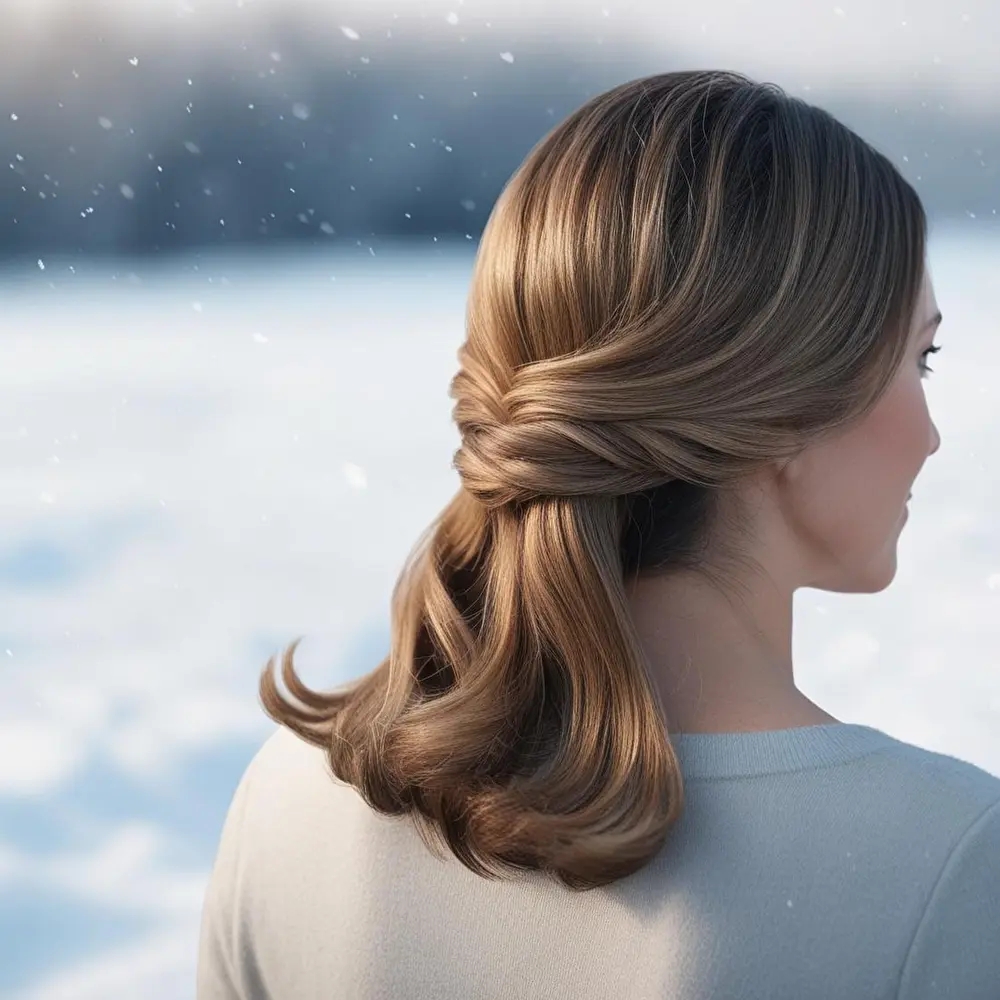
Hair Care in Winter: How to Protect Against Cold and Dryness?
What are the main hair problems?
1. Dry and damaged hair
Cold weather and low humidity in the external environment dry out hair very quickly. In addition, dry indoor air caused by heating systems can further aggravate the problem. The result? Hair loses its shine, becomes brittle and unpleasant to touch.
2. Dandruff and scalp problems
Due to dryness, the scalp begins to flake, which can cause not only aesthetic discomfort but also itching. Frequent use of unsuitable shampoos can further aggravate the problems. Dandruff on the scalp is one of the most common winter problems.
3. Static electricity
In winter, many people notice that their hair becomes electrified. This is caused by both dry air and hats and scarves made of synthetic fibers.
Common mistakes and how to avoid them
Washing too often
One of the most common mistakes is washing hair too often. During the cold season, hair is already prone to dryness, and frequent washing further removes the natural oil layer from the scalp.
Solution: Reduce hair washing to 2–3 times per week.
Unsuitable hair care products
Some shampoos and conditioners can dry out hair even more if they are not suited for the winter season.
Solution: Use products with moisturizing and protective ingredients such as argan oil, hyaluronic acid or coconut oil.
Insufficient scalp protection
It is often forgotten that the scalp is just as important as the hair itself. Cold and dryness can cause irritation and dandruff formation.
Solution: Choose oil-based scalp massages, which help restore the natural protective layer.
Practical tips on how to protect your hair in winter
1. Use moisturizing shampoos and conditioners. Moisturizing products help maintain hair softness and elasticity.
The composition should include: Glycerin, Hyaluronic acid, Panthenol
2. Invest in deep moisturizing masks. Hair masks with nourishing ingredients such as shea butter or avocado oil will provide a long-lasting effect.
3. Protect your hair from the cold. When you go outside, always wear a hat or scarf that protects the scalp and hair from the cold.
4. Choose hats made from natural materials. Synthetic hats can cause static electricity and additional dryness. Cotton or wool products are a better choice.
5. Reduce the use of hot styling tools. Hair dryers, straighteners and other styling tools dry out hair even more, especially in winter.
Tip: Use heat protection products and let your hair dry naturally whenever possible.
6. Drink enough water and take vitamins. Internal hydration is just as important as external hydration. Drink plenty of water and choose dietary supplements with biotin, zinc and omega-3 fatty acids.
Conclusions and recommendations
Hair care in winter requires not only choosing the right products, but also changes to your daily routine. It is important to take care of both the scalp and the hair, as these aspects are closely related.
Recommendations:
Follow simple but effective tips: hydration, protection from the cold and suitable products are the main principles of winter care.
If you notice that dandruff on your scalp is becoming an increasing problem, consult a specialist. It may be a more serious scalp problem that requires individual treatment.
These practical tips will help you maintain healthy and beautiful hair throughout the winter season!