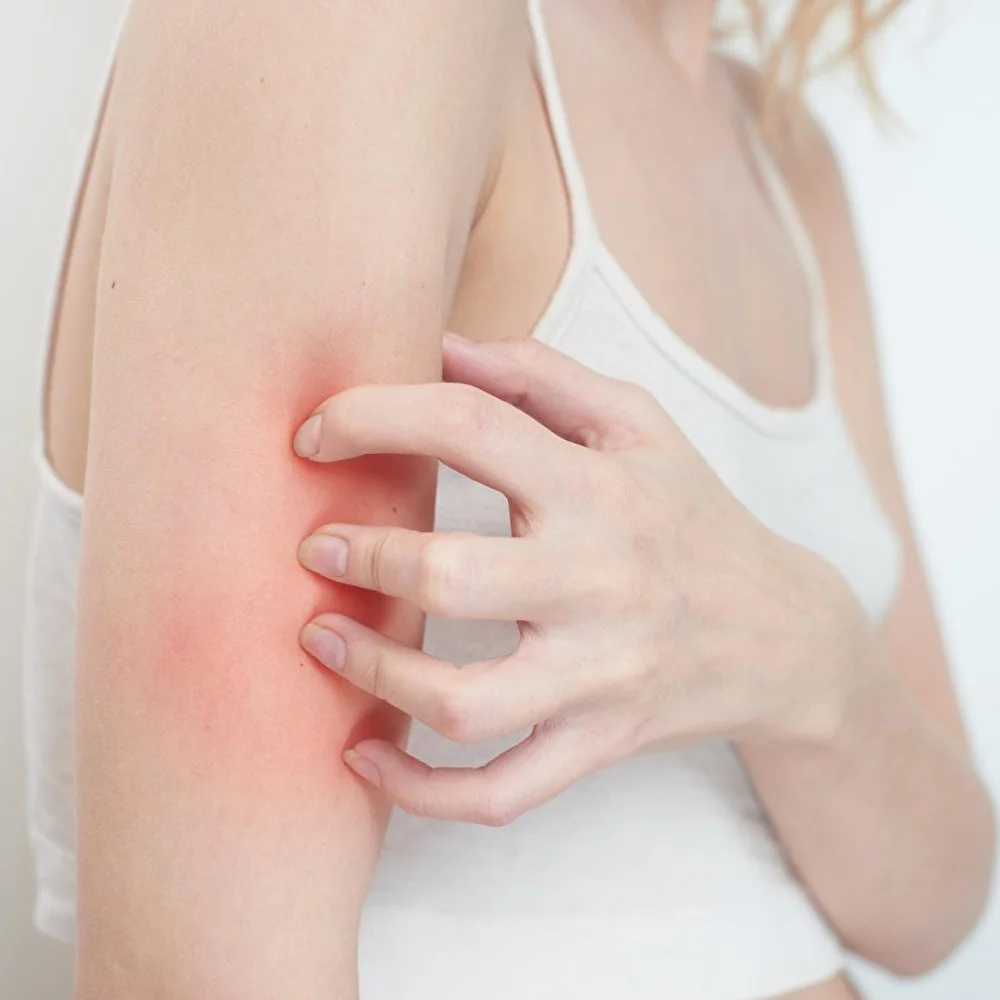
Most common skin allergic reactions: how to avoid them and how to treat them
Although allergic skin reactions can vary in severity-from mild to very severe-they share one common feature: an overactive immune response. In this article, we will take a closer look at the most common types of allergic skin reactions, their causes, preventive measures, and management strategies.
Contact dermatitis: an allergic reaction that occurs immediately after contact
Contact dermatitis is a common form of skin allergy that occurs when the skin comes into direct contact with an allergen. This contact triggers an immune response, leading to symptoms such as redness, itching, swelling, and in severe cases-blisters.
The most common causes of contact dermatitis are exposure to irritants such as nickel, found in jewelry and clothing fasteners, latex, commonly present in gloves and certain types of clothing, and certain cosmetic products that may contain allergenic substances. Other irritants may include fragrances and plants such as poison ivy or poison oak.
Although anyone can develop contact dermatitis, some people are more sensitive to certain substances. For these individuals, the most effective form of prevention is avoiding the allergen that causes the reaction. If an allergic reaction occurs, over-the-counter creams and ointments as well as oral antihistamines may help relieve symptoms. However, if symptoms persist or are severe, it is recommended to consult a healthcare provider.
Hives: a concerning skin rash
Hives are another common allergic skin reaction. They present as a sudden outbreak of swollen, pale red bumps or welts on the skin. Hives can appear anywhere on the body, vary greatly in size, and sometimes merge into larger areas known as plaques.
There are many different triggers for hives. These may include certain foods, medications, insect bites, exposure to heat or cold. In some cases, an outbreak of hives can be triggered by emotional stress or physical factors such as pressure on the skin.
Hives can cause significant discomfort due to intense itching, but they often disappear within 24 hours. However, chronic hives-those that last longer than six weeks or recur for months or years-require medical attention.
Atopic dermatitis: eczema and persistent itching
Atopic dermatitis, often referred to as eczema, is a chronic skin condition that tends to flare up periodically. It may be accompanied by hay fever or asthma. Eczema usually begins in childhood and may persist into adulthood. It is characterized by itchy, inflamed skin and often affects the inner elbows or knees and the face, but it can also involve much of the body.
The exact cause of eczema is unknown, but it is believed to result from a combination of genetic and environmental factors. Eczema flare-ups can be triggered by various factors, including dry skin, stress, sweat, and certain fabrics such as wool or polyester, which can irritate more sensitive skin. Allergens such as dust mites, mold, pollen, and certain foods can also provoke a reaction.
Treating eczema involves avoiding triggers and consistently moisturizing the skin. Moisturizing is especially important for many reasons, so you can read more about the importance of skin hydration here.
In some cases, treating eczema may require prescription medications such as topical corticosteroids or immunosuppressants.
To learn more about the chronic skin condition-eczema, click here.
Allergic drug reactions: medication-induced skin allergy
Medications, both oral and topical, can sometimes cause allergic skin reactions. These may present as a rash, hives, and in severe cases-Stevens-Johnson syndrome, which causes blistering and peeling of the skin and requires immediate medical attention.
It is important to note that drug reactions can occur with almost any medication, but they are more common with antibiotics, nonsteroidal anti-inflammatory drugs, and certain anti-seizure medications.
If a drug reaction is suspected, it is crucial to seek medical advice immediately. A healthcare provider may recommend alternative medications or possible reaction management strategies, such as a desensitization procedure for necessary medications.
Preventive measures and treatment options
Preventing allergic skin reactions largely involves avoiding known allergens. This may require allergen-specific testing to identify the substances that trigger reactions.
Maintaining healthy skin is also essential in preventing reactions. This may include regular moisturizing, using hypoallergenic products, and strictly avoiding soaps or detergents that can strip the skin of its natural oils. Consistent, effective moisturization and a healthy diet greatly improve overall skin health. For more information on the importance of skincare, habits that can help improve overall skin condition and other tips for maintaining optimal skin health, click here.
Treatment for allergic skin reactions depends largely on the type and severity of the reaction. Mild symptoms can often be relieved with over-the-counter creams and ointments, as well as oral antihistamines that reduce itching and inflammation. Moderate to severe reactions may require prescription medications.
However, in acute cases, such as a severe drug reaction or anaphylaxis (a severe and life-threatening allergic reaction), emergency medical care is necessary.
Understanding allergic skin reactions and their causes is vital for managing skin health and reducing the risk and severity of these reactions. It is important to remember that everyone’s skin is different-what triggers a reaction in one person may have no effect on another. Therefore, individualized understanding and observation are key.
If you experience persistent or severe skin reactions, always consult a healthcare professional for personalized advice and individualized treatment. With the right knowledge and proper management of skin allergies, they can be effectively controlled and overall quality of life can be improved.