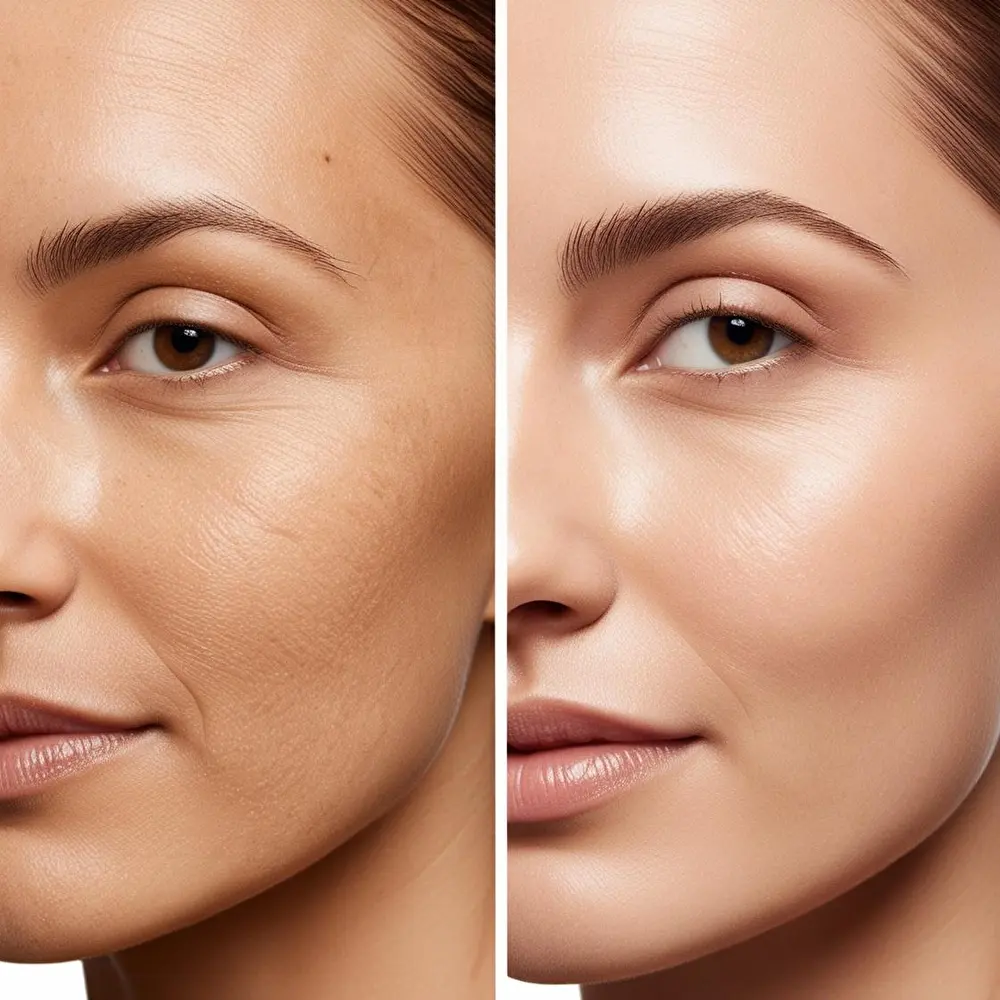
Why is it important to exfoliate your body skin regularly?
How does body exfoliation work?
Body exfoliation helps remove dead cells from the skin’s surface, allowing fresh skin to emerge. It can be done using various methods:
- Mechanical exfoliation – uses sponges, exfoliating gloves, or products with exfoliating granules.
- Chemical exfoliation – uses acids (e.g., glycolic, salicylic) that dissolve dead skin cells without mechanical rubbing.
- Natural methods – salt, sugar, or coffee scrubs, which often also have additional moisturizing properties.
How often should you exfoliate your body?
Body exfoliation depends on your skin type:
- Normal skin: 2–3 times a week.
- Dry and sensitive skin: 1–2 times a week, using gentler exfoliants.
- Oily skin: 3 times a week. Oily skin tends to accumulate impurities faster, so it should be cared for more often.
- Problematic or acne-prone skin: such skin requires extra caution. It is best to consult a dermatologist, as exfoliating too often can irritate the skin.
Body exfoliation by season:
- In winter: exfoliate less often, as the skin becomes more sensitive to cold and dryness.
- In summer: more frequent exfoliation can help remove sweat and oils and protect the skin from clogged pores.
Common mistakes when exfoliating the body and how to avoid them
1. Exfoliating too often
Exfoliating too frequently can irritate the skin, cause redness, and increase sensitivity. Always consider your skin’s needs and don’t overdo it.
2. Using unsuitable products
Overly harsh exfoliants can damage the skin. It is recommended to choose gentle products that won’t dry out the skin.
3. Forgetting to moisturize after exfoliation
After exfoliation, the skin becomes more sensitive, so it is essential to use moisturizing creams or oils to maintain its hydration.
4. Exfoliating before sunbathing
Freshly exfoliated skin is more sensitive to UV rays, so it’s best to exfoliate in the evening or at least use strong sun protection.
Practical tips for exfoliating properly
1. Choose the right product
Select exfoliants according to your skin type. If your skin is sensitive, it’s better to use gentler products with moisturizing ingredients.
2. Use the right exfoliation technique
Exfoliate using circular motions, avoiding overly vigorous rubbing. Pay special attention to rougher areas – elbows, knees, feet.
3. Moisturize after exfoliation
Apply body lotion or oil immediately after exfoliating, while the skin is still damp-this will help lock in moisture and maintain skin elasticity.
4. Exfoliating in the bath or shower
It’s best to exfoliate in a warm environment, as steam helps open pores and makes it easier to remove dead skin cells.
5. Combine exfoliation with other beauty treatments
After exfoliation, the skin absorbs nourishing substances better, making it an excellent time to use body masks or serum products.
Conclusions and recommendations
Regular body exfoliation helps keep the skin soft, smooth, and healthy. It is important to consider your skin type, the seasons, and the exfoliating products you use to avoid skin damage. It’s best to stick to an exfoliation routine, while also remembering to moisturize and protect the skin from external factors. When done correctly, exfoliation will help keep your skin radiant and elastic for a long time.