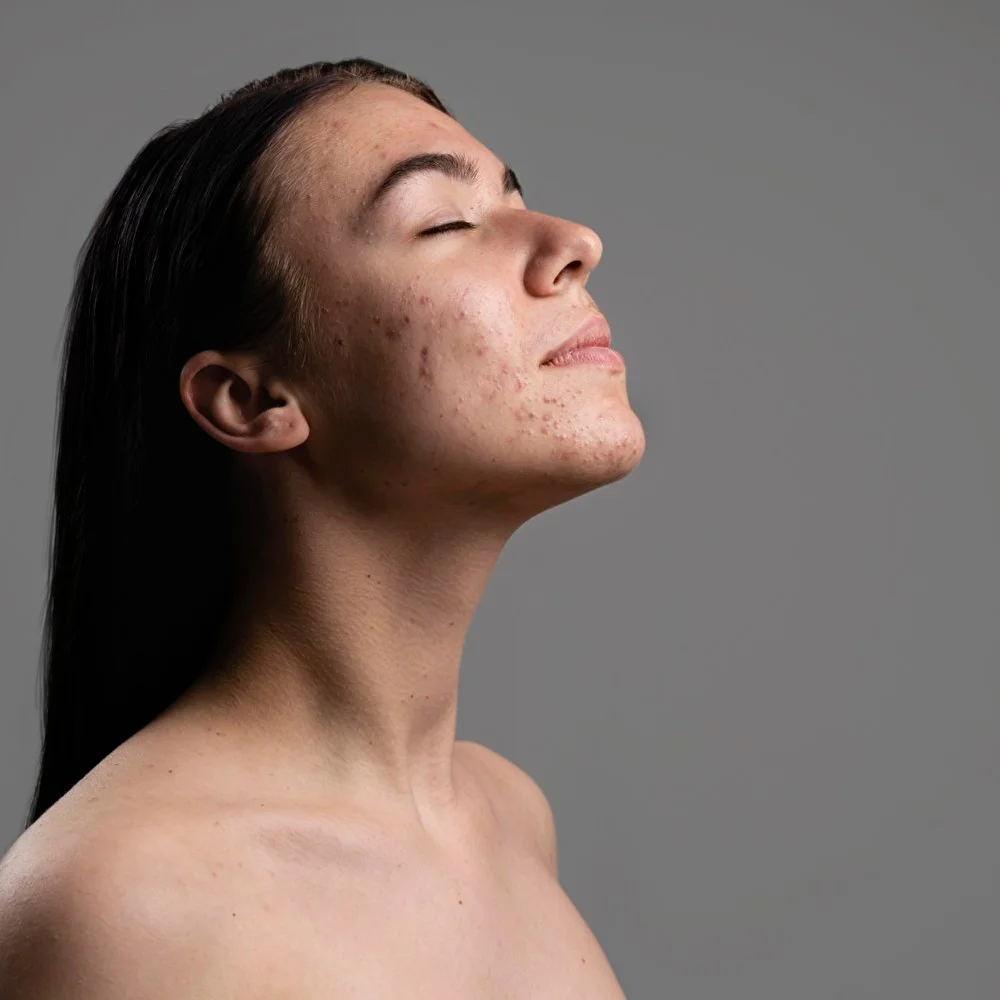
Acne routine: how to care for acne-prone skin
Why does acne need a clear routine?
Acne-prone skin reacts to two things - excess oil and irritation. When there are too many products or they are too harsh, the skin responds with new breakouts. When there are too few products or they are unsuitable, pores become clogged. That is why daily acne care is based on four steps: cleansing, an active treatment, moisturizing, and sun protection.
Do you need ten products? No. Our cosmetologists see that a short, consistent routine followed for several months works best. It is consistency that drives change, not a new bottle every week.
How to Build an Acne Routine Step by Step?
A routine for oily skin has its own logic. Each step performs a specific task, and their order is important. Let’s discuss each one separately.
1. Gentle Cleansing Morning and Evening
A cleanser should remove excess oil without drying out the skin. Soap and harsh cleansers only make the situation worse—the skin produces even more oil. Choose liquid gels or foams with salicylic acid or zinc. Cleansing in the evening is always essential; in the morning, lukewarm water may be enough if the skin is sensitive.
2. BHA Acids for Pore Cleansing
BHA acids are the main active ingredient for acne. Salicylic acid is oil-soluble and penetrates into the pores, where it dissolves clogged glands. That is why BHA acids for acne work better than AHA—AHA acids remain on the skin’s surface. Start twice a week in the evenings, then gradually increase to every other day.
3. Moisturizing—Yes, Even for Oily Skin
Clients often think that oily skin does not need moisturizing. That is a mistake. When the skin is dehydrated, it produces even more oil as protection. Choose lightweight gel textures with niacinamide, hyaluronic acid, or zinc. No heavy oils, no comedogenic coconut.
4. SPF Every Morning
BHA acids make the skin more sensitive to the sun, and post-inflammatory hyperpigmentation after breakouts is one of the most common issues. SPF 30 or 50 with a mineral or lightweight chemical filter is essential. Without it, post-acne marks will appear twice as intensely and last for months.
5. Spot Treatments Only on Breakouts
Spot treatments with benzoyl peroxide, sulfuric acid, or a higher concentration of salicylic acid should be applied only to a specific pimple, not to the entire face. They dry out the skin, so they are used locally, not as a cream.
Does squeezing a pimple actually speed up its healing? The answer is simple - no, in most cases the opposite. Our cosmetologists see the same scenario every week: a client squeezes a pimple, the skin becomes red, a small wound appears, and after two weeks, a dark spot remains in that area, lasting three or four months. The inflammation goes deeper, and a scar may appear. Instead of squeezing, we recommend a spot treatment with salicylic acid in the evening and in the morning, and an ice compress in the morning if the pimple is painful. Within two to three days, the pimple will calm down on its own. This is not a question of patience - it is a question of protecting the skin.
How to follow an acne routine without irritating the skin?
Active products only work when the skin tolerates them. That is why the beginning should always be gentle: BHA twice a week, after two weeks - three times, after a month - every other day. If the skin becomes red, starts peeling, or begins to sting, reduce the frequency rather than stopping completely.
Do not combine BHA with retinol on the same evening if you are just starting out. These two actives together are often too strong. It is better to use BHA on Monday and Wednesday, and retinol on Tuesday and Thursday. Friday - a rest day for the skin.
Apply moisturiser to slightly damp skin - this helps the active ingredients absorb better, while keeping the skin barrier stronger. In the morning, SPF is applied as the final step before makeup.
When can you expect changes? Realistically - after six to eight weeks. During the first two weeks, the skin may even worsen, as acids clear out the inside of the pores. This is called the “adjustment phase” and is normal. If you want more options in one place, browse acne products - there you will find everything from cleansers to spot treatments.
What do we recommend for acne-prone skin?
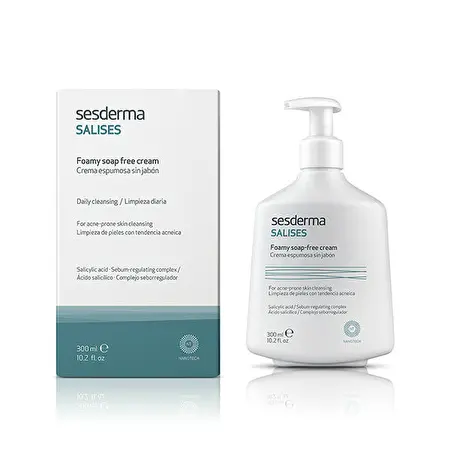
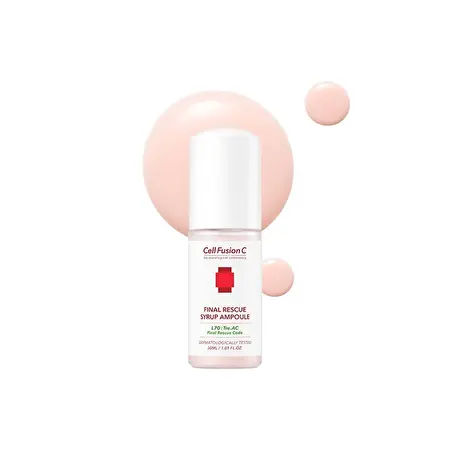
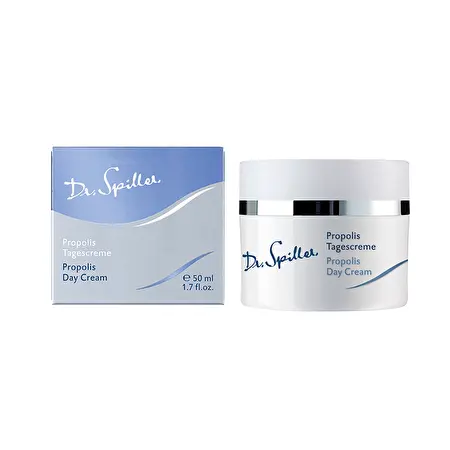
We have put together three products that, together, form the foundation of a complete daily routine: cleansing, active care, and hydration. They are suitable for oily and combination skin that tends to shine in the T-zone and is prone to recurring breakouts. All formulas are gentle enough to be used daily without irritation.