Enzymatic Exfoliator for Sensitive Skin: How to Choose?
What is an enzyme exfoliant and why is it suitable for sensitive skin?
An enzyme exfoliant is a gentle exfoliating product whose active component is plant-based enzymes. They break down the protein bonds between dead skin cells on the surface and allow them to shed without friction. No harsh particles. No acidic burning sensation.
This is exactly why clients with sensitive skin often choose an enzyme peel. It does not irritate capillaries, does not damage the skin barrier, and does not leave the face feeling tight after use. Does this mean the effect is weaker? Not at all - the skin becomes smoother, differences in tone soften, and creams absorb better even after the first few uses.
How do papain, bromelain, and other enzymes work?
Enzyme exfoliants most commonly use three main enzymes: papain from papaya, bromelain from pineapple, and subtilisin. They all belong to the protease group—this means their target is proteins. Specifically, keratin bonds that keep dead cells attached to the skin’s surface.
When an enzyme breaks down these bonds, the cells exfoliate on their own. No scrubbing is needed. No acids are needed. The skin renews itself in the way it does naturally, only faster and more evenly.
Papain
Papain is perhaps the most popular enzyme in cosmetics. It is gentle, well tolerated even by very sensitive skin, and begins to work within a few minutes of application. Suitable for clients who complain of a dull skin tone, enlarged pores, or small pimples on the chin.
Bromelain
Bromelain works similarly, but also has anti-inflammatory properties. It is worth choosing if your skin tends to become red, sting, or react to temperature changes. Clients notice that facial redness calms down after this type of peel.
How does an enzyme peel differ from acid or mechanical exfoliation?
A mechanical exfoliant contains physical particles—salt, sugar, synthetic granules, or crushed fruit pits. They exfoliate through friction. For sensitive skin, this is often too harsh: micro-scratches appear, capillaries become more visible, and the barrier weakens. Acid exfoliants with AHA or BHA work chemically—they dissolve the bonds between cells, but can cause tingling, peeling, and sensitivity to the sun.
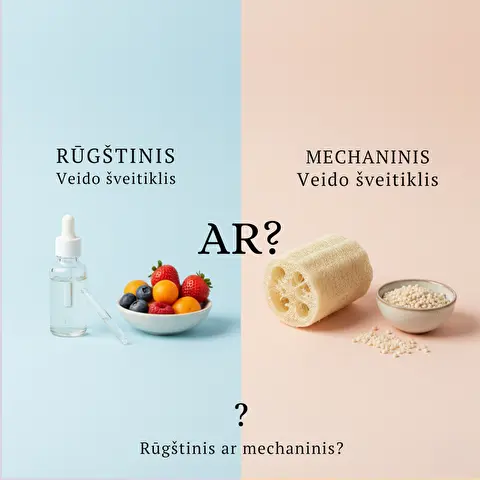
An enzyme peel falls somewhere in between. Gentle like a cream, but effective like a chemical exfoliant. A more detailed comparison of acid and mechanical exfoliation is available in our separate article—there we discuss when each type is most suitable.
What should you choose for sensitive skin? In almost all cases—an enzyme option. It does not require neutralization, does not disrupt the skin’s pH, and works well with other products: retinol, vitamin C, or niacinamide. A few mistakes can be made—we will discuss them below.
Why does an enzyme exfoliator “not work” for some customers? Our cosmetologists note that the most common reason is leaving it on for too short a time or having skin that is too dry during use. Enzymes need moisture to work. That is why we recommend mixing powder-type peels with water to a cream-like consistency, and applying cream-based ones to slightly damp facial skin and leaving them on for at least 5-10 minutes. Not 30 seconds. The second common mistake is using it together with AHA acids on the same evening. Don’t do this. One evening—enzymes, the next—acids, and your skin will thank you.
How Often Should You Use an Enzyme Exfoliator?
For sensitive skin, once or twice a week is enough. For normal and combination skin, up to two to three times. For oily skin with clogged pores, it can be used three times, but monitor the skin’s reaction.
The application routine is simple. Cleanse your face with a gentle cleanser. Leave the skin slightly damp - this is important so the enzymes can work. Apply a thin layer of exfoliator to the face and neck, avoiding the under-eye area. Leave on for 5-10 minutes, then rinse off with lukewarm water. After that - toner, serum, cream.
Can it be used in the morning? Yes, if you are not going out in the sun afterward and use SPF 30 or higher protection. However, most customers choose an evening routine - this allows the skin to renew calmly overnight.
When choosing a specific product, consider the form (powder, gel, cream), the source of the enzymes, and additional ingredients. A wider selection of facial exfoliators is available in our store - there you can filter by skin type.
Three enzymatic exfoliants for sensitive skin
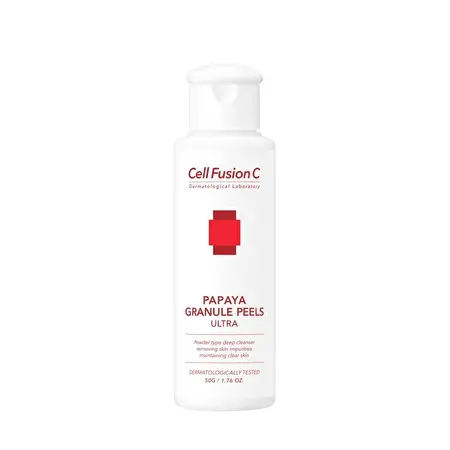
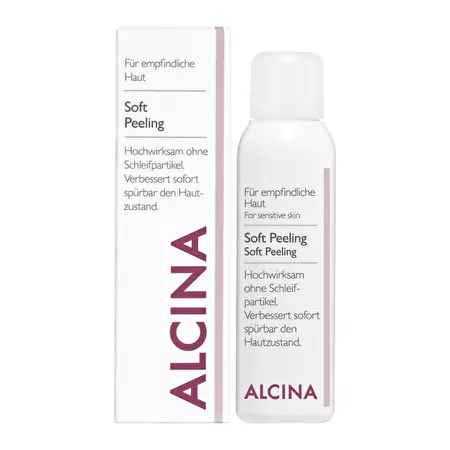
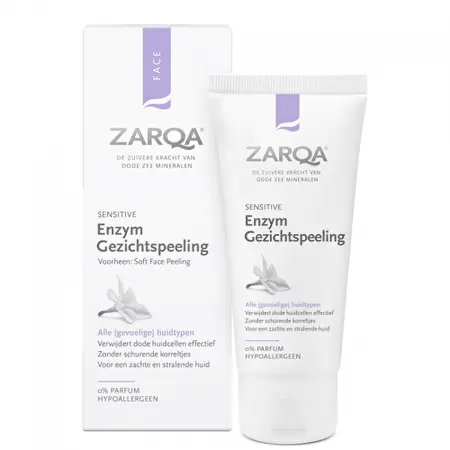
From our entire range, we have selected three different enzymatic peels that are suitable for sensitive or reactive facial skin. One has a creamy texture, another comes in powder form and is activated with water, while the third is a gentle enzymatic gel for problem skin. All three work without friction.