Skin Allergy: The Most Common Reactions, Prevention and Treatment
What is a skin allergy and why does it occur?
A skin allergy is an immune system reaction to a substance that the body considers foreign and potentially harmful. The reaction can be sudden or delayed. Sometimes redness appears within a few minutes after contact, sometimes only after a day or two. This is precisely why it can be difficult to identify the culprit.
Allergic skin reactions can be triggered by cosmetic ingredients, metals (especially nickel), plant sap, medications, food products, or household chemicals. Allergy-prone skin often has a weaker protective barrier, allowing irritants to penetrate more easily into the deeper layers. This explains why some people tolerate a new cream perfectly, while for others it causes itching or blisters.
What Are the Most Common Allergic Skin Reactions?
Skin allergy can take several forms. Some go away on their own within a couple of days, while others require a doctor’s intervention. It is important to recognize what you are dealing with.
Contact Dermatitis
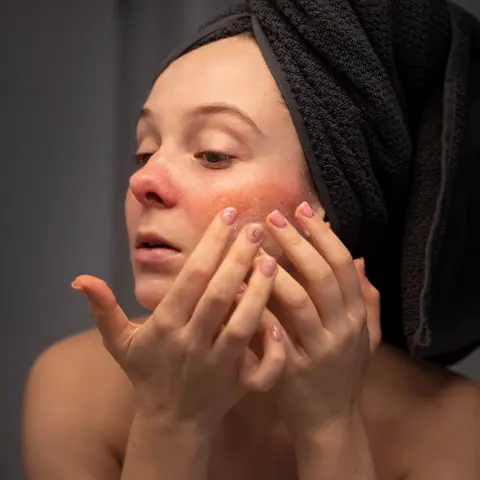
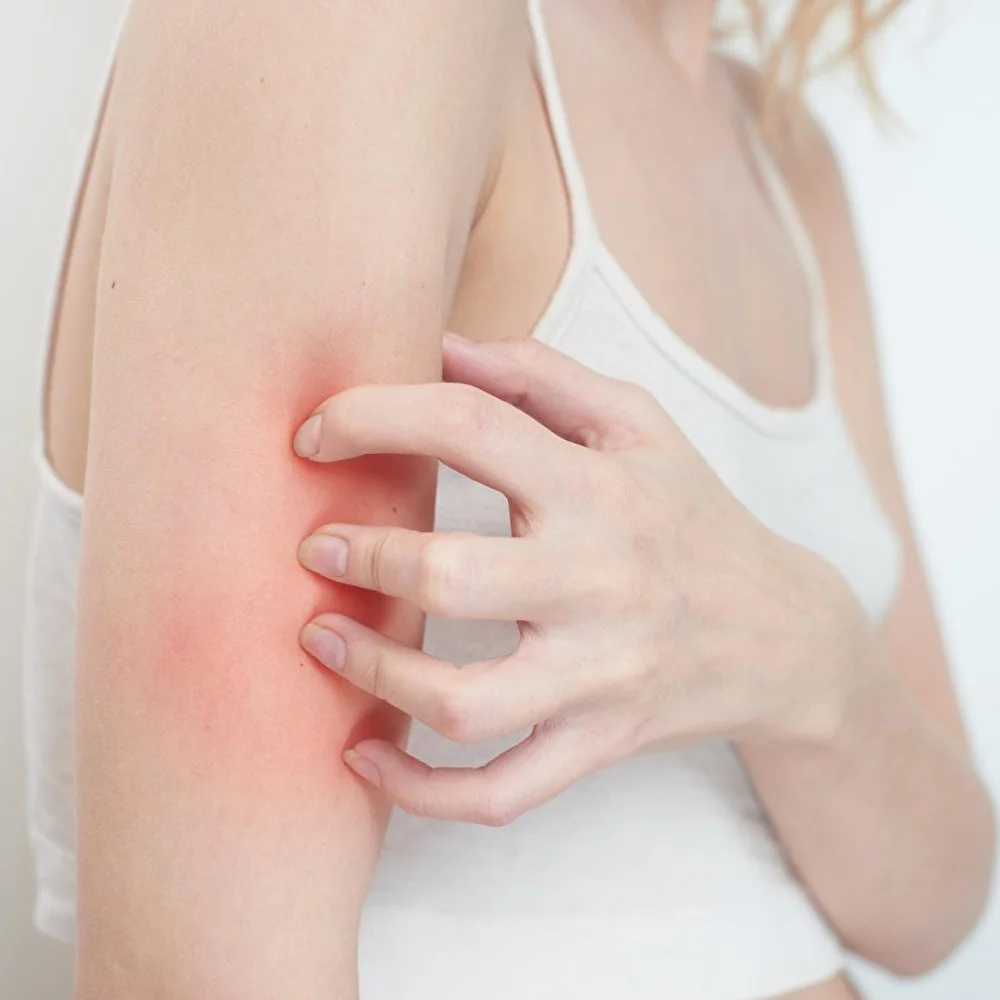
This is probably the most common form of skin allergy. Contact dermatitis appears in the area where the skin has directly touched an irritant—a cream, perfume, laundry detergent, metal jewelry, or a rubber glove. The skin becomes red and irritated, small blisters appear, it peels, and intense itching is felt. The reaction may be allergic (immune) or irritant (caused by the aggressiveness of the substance itself). If symptoms keep recurring in the same areas, it is worth having patch tests performed by a dermatologist.
Hives (Urticaria)
Hives are characterized by raised pink or white patches resembling a nettle burn. They are very itchy and can change location within a few hours—disappearing in one area and appearing in another. The causes vary: food, medication, cold, heat, stress, or infection. Acute hives usually go away within a couple of days, but the chronic form can last for months.
Eczema (Atopic Dermatitis)
Eczema is a chronic condition of dry, itchy skin, often associated with an inherited tendency toward allergies. The skin is dry, thickened, with areas of redness or flaking in the bends of the elbows, knees, or wrists. Flare-ups are triggered by dry air, stress, certain foods, or harsh cosmetics. Gentle care and restoring the skin barrier are key here. Sensitive skin SOS tips are useful when you need to quickly soothe irritation.
Angioedema and More Severe Reactions
Angioedema appears as deeper swelling of the skin and mucous membranes—most often around the eyes, lips, and tongue. It may accompany hives or occur separately. If the tongue or throat swells, or breathing becomes difficult, this is no longer a cosmetic issue—calling for medical help is essential. Anaphylactic shock is rare but life-threatening.
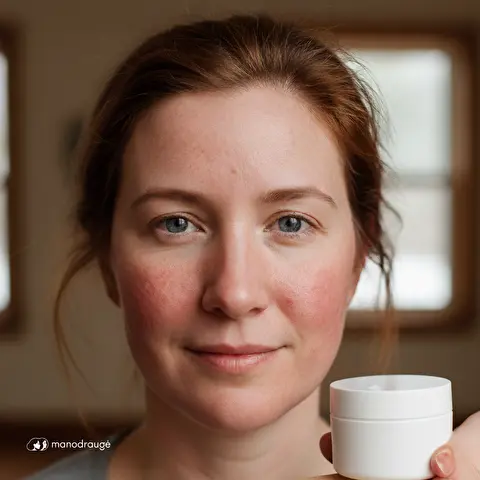
Sometimes an allergic reaction is confused with rosacea or simple redness caused by the cold. We described how to distinguish these conditions in the article about redness and rosacea. The difference is important, as the treatment approaches are completely different.
How can you tell whether a new cream suits you before applying it to your entire face? Our cosmetologists always recommend performing a simple test - apply the new product to a small area on the inside of your wrist or behind your ear for three consecutive days. If no redness, itching, or tingling appears during that time, the product can be used on the face. Clients often skip this step and then struggle with irritation that lasts for a week. A second tip - do not change several products at the same time. Introduce them one at a time every two weeks so you know which one caused the reaction.
How to Protect Against and Treat Skin Allergies?
Prevention is always simpler than treatment. The first step is to read the ingredients. Allergy-prone skin should avoid fragrances (parfum), ethyl alcohol, harsh surfactants (SLS), and formaldehyde-releasing preservatives. Choose products labeled as suitable for sensitive skin, fragrance-free, and with a short ingredient list.
Once a reaction has already appeared, first remove the irritant - rinse the skin with cool water, without soap. Then use a soothing cream with panthenol, allantoin, niacinamide, Centella asiatica, or oat extract. These ingredients relieve itching and help restore the skin barrier. If itchy skin continues to bother you, a doctor may prescribe antihistamines or a short-term hydrocortisone cream.
Consult a doctor if the symptoms recur, spread, if pus-filled blisters appear, if you have a fever, or if your face becomes swollen. Self-treatment in such cases only delays a proper diagnosis. For gentle daily care, products for sensitive skin are suitable - they are designed not to provoke reactions and to strengthen the skin’s resistance.
What do we recommend for allergic and irritated skin?
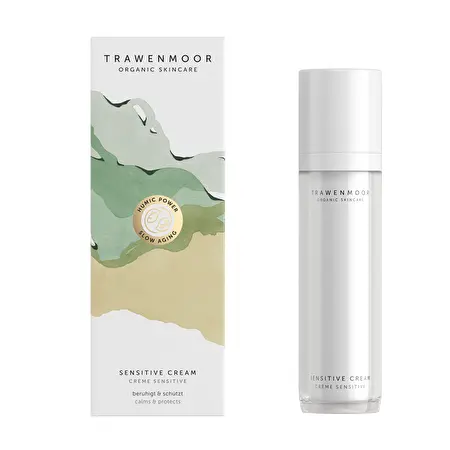
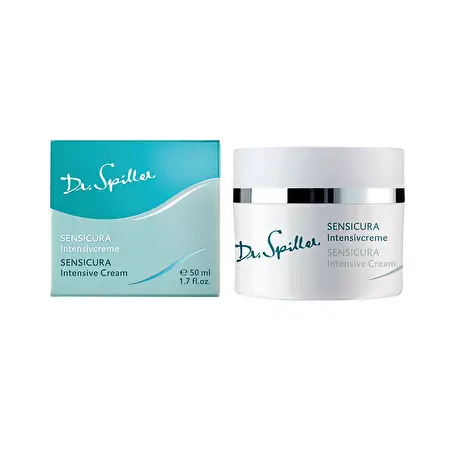
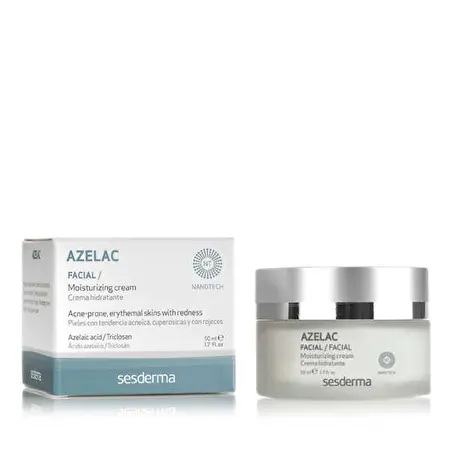
When skin is sensitive, red, or itchy, it is important to choose products that work in several ways - soothing, strengthening the protective barrier, and reducing redness. We have put together three different solutions: for daily care of dry, sensitive skin, intensive soothing during flare-ups, and restoration of damaged, reddened skin.