Sensitive skin: how to recognize it and care for it calmly
What Is Sensitive Skin and Why Does It React?
Sensitive skin is not a diagnosis, but a condition in which the skin’s protective barrier is weakened. As a result, irritants that normal skin would simply withstand can cause redness, burning, or itching in sensitive skin. It reacts to fragrances, alcohol, cold air, air-conditioned indoor air, water that is too hot, and even a rough towel.
Does your skin feel tight after cleansing? Does it turn red even from a gentle exfoliant? These are signals. Our cosmetologists notice that for most clients, sensitivity is not innate — it developed after prolonged overly aggressive skincare. The good news: the barrier can be restored.
How to recognize sensitive skin and what are the main causes?
Signs of sensitivity are sometimes obvious, and sometimes hidden under makeup. It is worth observing your skin daily, not only when it has already become red or itchy. The sooner you respond, the easier it is to restore the barrier.
Main signs of sensitive skin
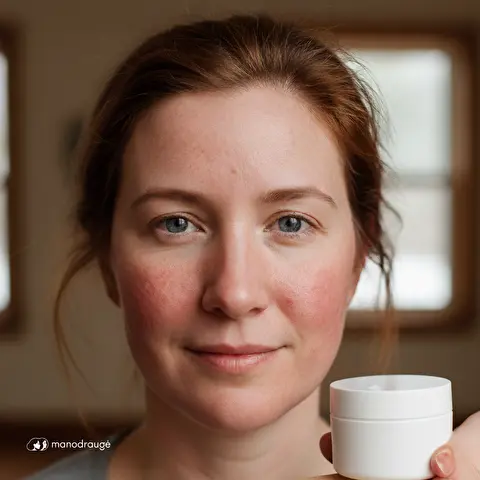
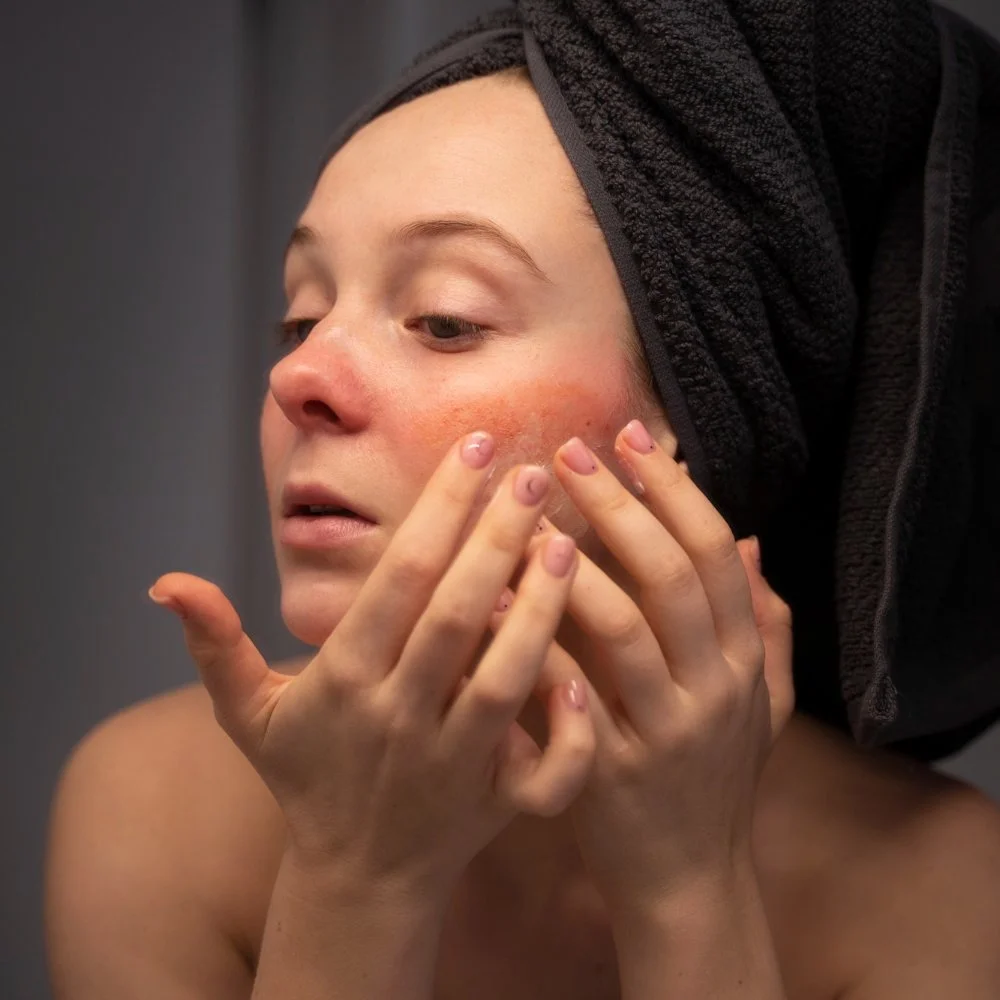
Typical signals: red skin on the cheeks and around the sides of the nose, a feeling of tightness after cleansing, burning after applying a cream or serum, dry patches that flake. Sometimes itching appears without any visible reason. In summer, the skin reacts to the sun, in winter - to wind and cold. If these signs keep recurring, the skin is truly sensitive, not just having a “bad day”.
Why does the barrier weaken?
There are many reasons. Exfoliating too often, strong acids without breaks, alkaline soaps, hot showers, toners containing alcohol. Add stress, lack of sleep, and dry indoor air - and the barrier can no longer recover in time. Genetics also matters: fair skin types prone to redness and rosacea more often have a thin, reactive skin layer. Read more about this in our article redness and rosacea.
How to distinguish sensitive skin from dry skin?
Dry skin lacks sufficient lipids and oils. Sensitive skin can be of any type - even oily. The difference is simple: dry skin feels tight but is not irritated by skincare products. Sensitive skin reacts to specific ingredients or temperature. These conditions often overlap - the skin is both dry and sensitive. In that case, skincare must moisturize and soothe at the same time.
Can sensitive skin be exfoliated?
Yes, but carefully. Harsh scrubs with kernel particles are not suitable. Instead, choose enzyme-based products that work without rubbing. We recommend reading the article enzymatic exfoliator for sensitive skin - it is the gentlest way to renew the skin’s surface without damaging the barrier.
Why doesn’t an expensive soothing cream work if the skin is constantly red? Our cosmetologists see clients every day who apply increasingly stronger creams but continue using an aggressive cleanser or an alcohol-based toner. A cream cannot compensate for what is washed away twice a day. We recommend starting with cleansing: choose a milk cleanser or a gentle sulfate-free gel, wash with lukewarm water, and do not rub the skin with a towel. After cleansing, apply a soothing serum to damp skin and only then apply cream. Follow the same simple routine for three weeks—and skin sensitivity will noticeably decrease.
How to Create a Sensitive Skin Routine Step by Step?
Sensitive skin care is based on three principles: fewer products, gentler textures, and consistency. Five serums at once will not help—they will only irritate the skin even more.
Morning: a gentle cleanser, a soothing alcohol-free toner, a hydrating serum with panthenol or niacinamide, a soothing face cream, and SPF 30 or higher. Sunscreen for sensitive skin is essential every day, even in winter. Mineral filters with zinc oxide are usually better tolerated by the skin than chemical ones.
Evening: the same cleanser, toner, serum, and a richer cream with lipids or squalane. Once a week—an enzymatic exfoliator or a soothing mask. Acids and retinol—only after consulting a cosmetologist and gradually.
What should you do when your skin suddenly turns red? Stop using all active ingredients for three to five days. Apply only a gentle cream and SPF. This is called “skin fasting”—a rest for the skin. You will find more soothing products in the category products for sensitive skin. Strengthening the skin barrier is a marathon, not a sprint.
Three Products to Soothe Sensitive Skin
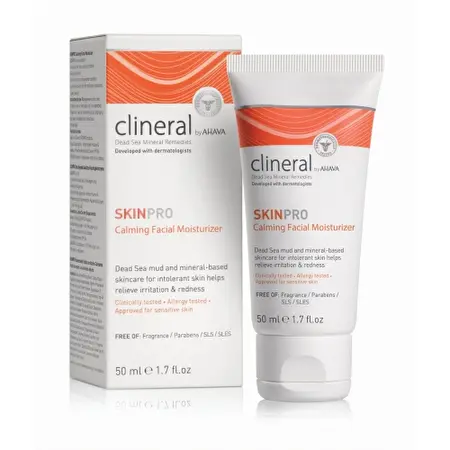
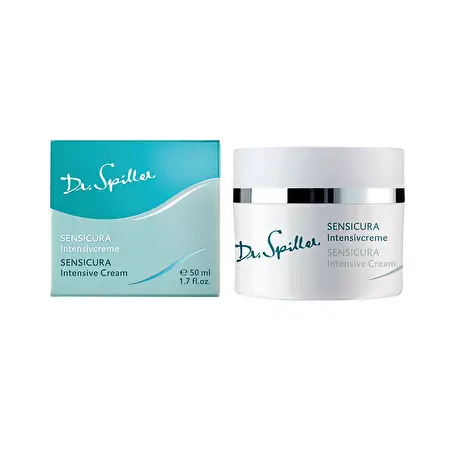
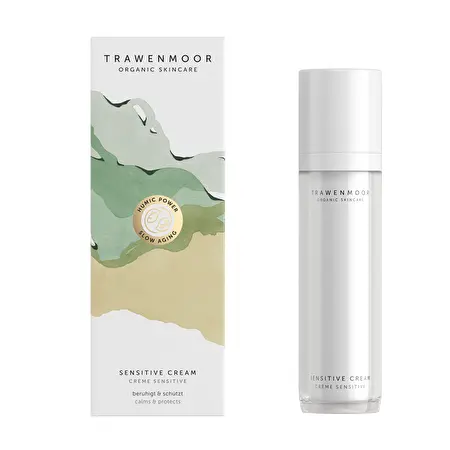
We have selected three different professional cosmetics solutions for sensitive skin. One is designed for redness-prone and highly reactive skin, another to relieve dryness and the feeling of tightness, and the third for daily barrier protection against external irritants. Each of them is formulated with gentle, dermatologically tested ingredients.