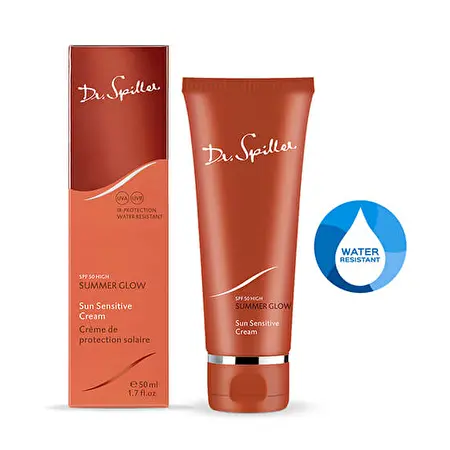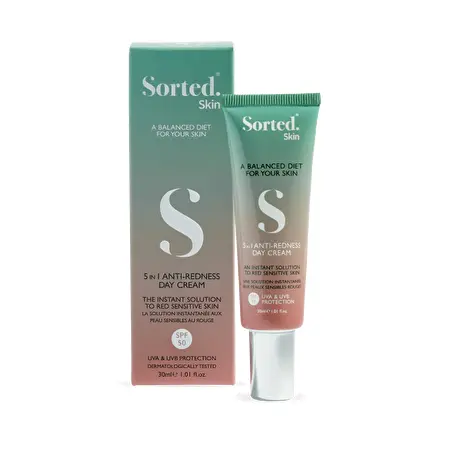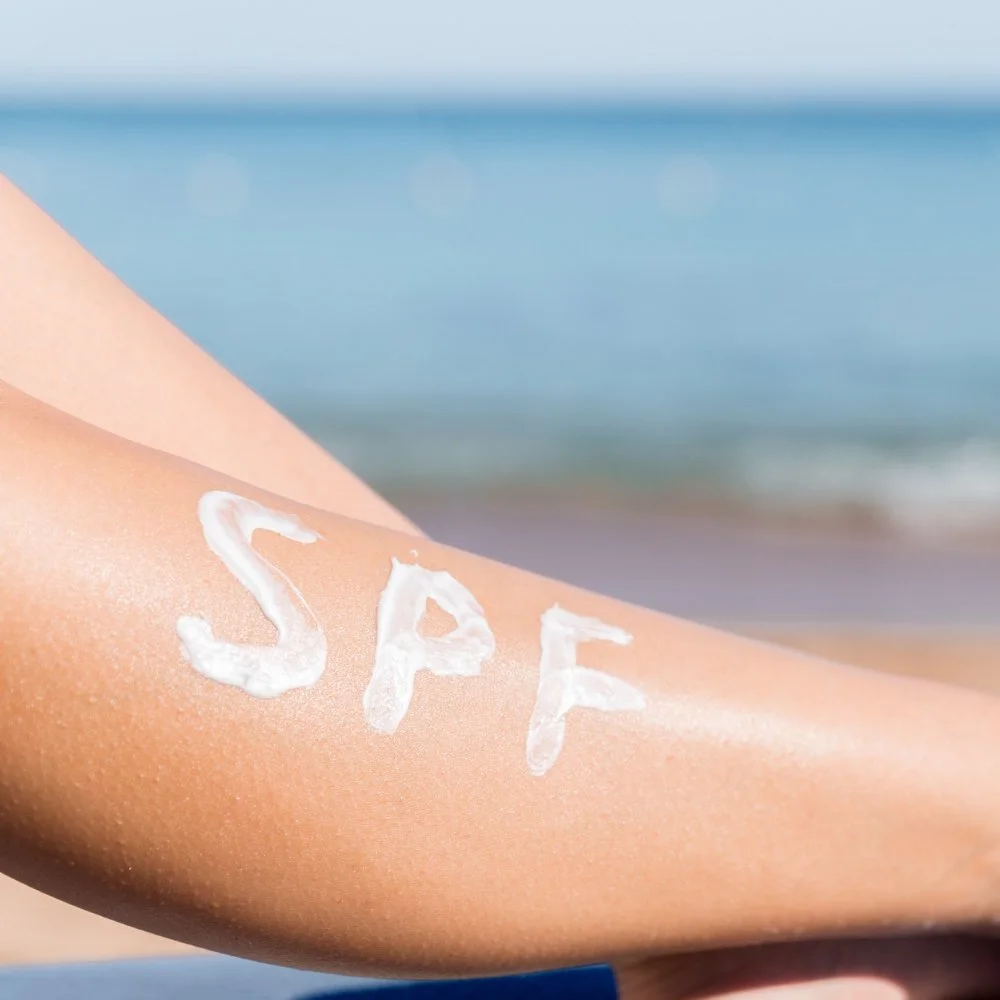
Why is SPF the most important step in skincare?
UV radiation is the main reason why skin ages prematurely. Not genetics, not stress — the sun. Up to 80% of facial wrinkles, pigmentation spots, and texture deterioration are caused by the effects of UVA and UVB.
Most importantly, UV rays affect the skin every day. Through clouds, through office windows, even in winter. Our cosmetologists see this every spring: clients who stopped using SPF in winter come in with new pigmentation spots. And those who used SPF all year round — their skin is completely different. That is why dermatologists agree: if you have to choose one product, choose SPF.
What do SPF numbers mean and how does the protection math work?
SPF (Sun Protection Factor) indicates how many times longer you can stay in the sun without burning. It works like this: if your skin would turn red in 10 minutes without protection, with SPF 30 you could theoretically stay for 300 minutes (10 × 30). But this is a laboratory calculation. In real life, sweat, water, and friction from clothing reduce protection much faster.
In practice, percentages are more important: SPF 15 blocks about 93% of UVB rays, SPF 30 - about 97%, SPF 50 - about 98%. The difference between SPF 30 and SPF 50 is only 1%. For everyday city use, SPF 30 is fully sufficient. In the mountains, at the beach, or when exercising outdoors - choose SPF 50+.
What is the difference between UVA and UVB?
UVB rays cause sunburn - they affect the surface of the skin and are strongest in summer. UVA rays penetrate deeper. They damage the skin structure, accelerate aging, and cause pigmentation spots. UVA rays are equally strong all year round and even pass through window glass.
Therefore, choose broad spectrum protection that blocks both types. In Asian cosmetics, UVA protection is indicated by PA+++ labeling - the more “+” signs, the stronger the protection. Don’t forget: reflections make protection even more important. Snow reflects up to 80% of UV rays, water - about 25%, sand - about 15%. When skiing in the Alps or even walking in Nida in winter, your skin receives a double dose: direct and reflected.
By the way, it is important to know - red skin does not always mean sunburn. Redness can also be caused by rosacea or an allergic reaction. But if redness appeared after being in the sun - it is almost certainly UV damage.
Physical or chemical SPF - which is suitable for whom?
Physical (mineral) filters - zinc oxide and titanium dioxide - act like a mirror: they reflect UV rays from the skin’s surface. They start working immediately, are suitable for sensitive skin, and do not irritate damaged skin. The downside: they may leave a white cast on the skin.
Chemical filters absorb UV rays and convert them into heat. They have a lightweight texture and are invisible on the skin. But they start working only after 15-20 minutes - so apply them in advance, not at the door. They may irritate sensitive skin. Many modern products combine both filters - this achieves both strong protection and a comfortable texture.
Do you know how much SPF your face needs? Half a teaspoon. Most people apply 2–3 times less, so the actual protection is significantly weaker than expected. When outdoors, don’t forget to reapply every 2 hours, especially during summer. And if you think that powder or foundation with SPF provides enough protection – unfortunately, the layer is too thin. Do you use retinol or AHA acids? Then SPF in the morning is essential, as these products increase the skin’s sensitivity to the sun.
How to Use SPF Correctly Every Day?
Amount: half a teaspoon for the face, approximately a full glass for the entire body. Most people apply too little — this is the most common mistake we see.
If you choose chemical filters, SPF should be applied 15–20 minutes before going outside. Mineral filters work immediately. SPF is always used last — after serum and cream. Let it absorb for a minute or two, and only then apply makeup.
Reapplication: when outdoors, reapply SPF every 2 hours. If you are in the city, not in direct sunlight, and not sweating much, one application in the morning is usually enough. After swimming or heavy sweating — reapply immediately.
Do not forget areas that are often left uncovered: ears, neck, lips (use an SPF balm), and hands — they age especially quickly. It is also worth knowing that car side windows let UVA rays through, so if you drive a lot, an additional layer of SPF will definitely be useful.
Another important aspect is skin hydration. Well-hydrated skin is more resistant to UV exposure, while dehydrated skin is more sensitive, so moisturizing before SPF is essential. If you plan to spend longer in the sun, also choose physical protection: a wide-brimmed hat, sunglasses, and lightweight, long-sleeved clothing.
Recommended products